Available
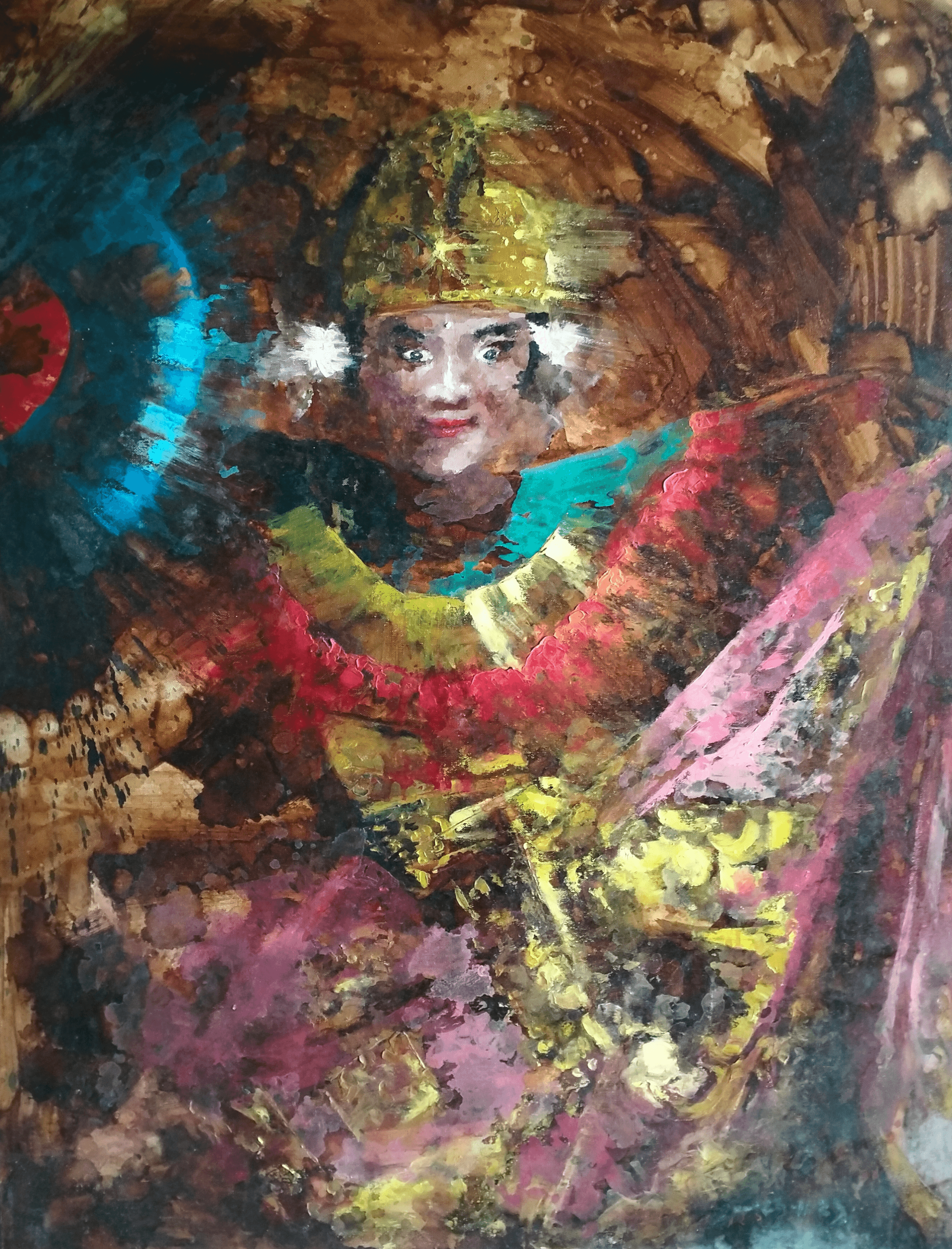
TERUNAJAYA DANCE
Suarta Nyoman$800
- Medium
- Oil on canvas
- Dimensions
- 35"H × 27"W
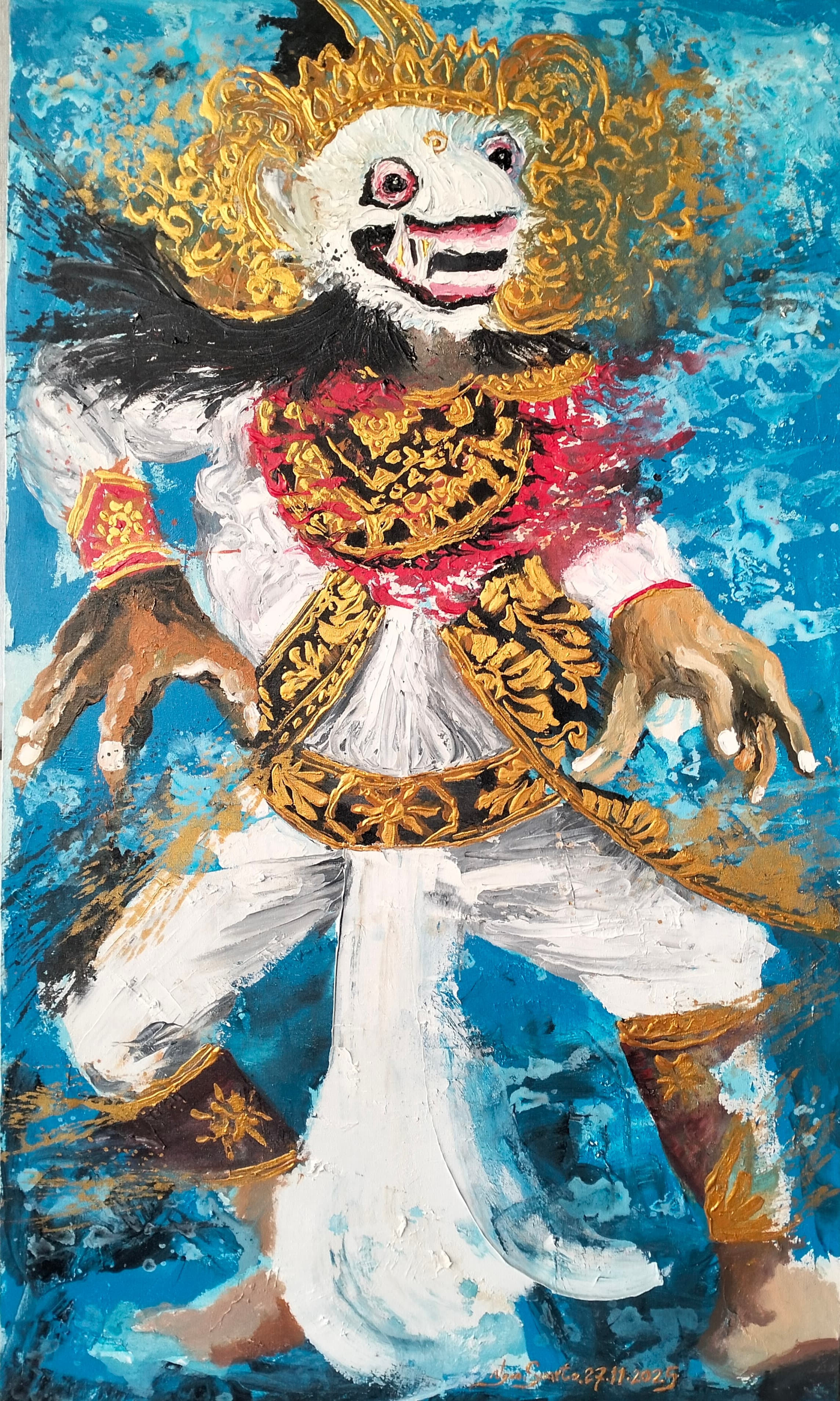
From a whirlwind of color and movement, the figure of Teruna Jaya emerges as an embodiment of youthful energy, pride, and transformation. His gaze is direct and intense, while the vibrant layers surrounding him dissolve the boundary between dancer and emotion, creating a space where movement becomes a visual experience rather than a physical act. In Balinese tradition, Teruna Jaya represents the spirit of a young man entering maturity—full of confidence, charm, ambition, and emotional intensity. Through the language of SUart, this iconic dance is reimagined not as a literal performance but as an inner landscape where identity is continuously formed and transformed. The expressive brushwork and fragmented forms echo the dynamic gestures of the dance itself. Gold accents symbolize vitality and noble aspiration, while the surrounding bursts of color reflect the complexity of youth: passion, uncertainty, courage, and desire. The figure appears to emerge from an abstract field of memories and emotions, suggesting that growth is never a linear journey but a constant negotiation between innocence and experience. Rather than depicting a specific moment on stage, this work seeks to capture the invisible energy that lies beneath the performance—the emotional pulse of becoming. The dancer becomes a metaphor for the universal human experience of self-discovery, where confidence and vulnerability coexist within the same movement. Through this painting, Teruna Jaya is transformed from a traditional dance into a timeless symbol of youthful spirit, resilience, and the eternal pursuit of identity.