Shop/Discovery, Extermination and Inherited Traditions. Samaná, the Cradle and My Father's Birthplace
Available
Discovery, Extermination and Inherited Traditions. Samaná, the Cradle and My Father's Birthplace
Yahaira Lidia Reyes-Forkan$1,450
- Medium
- Acrylic on Canvas
- Dimensions
- 70"H × 50"W
- Year
- 2026
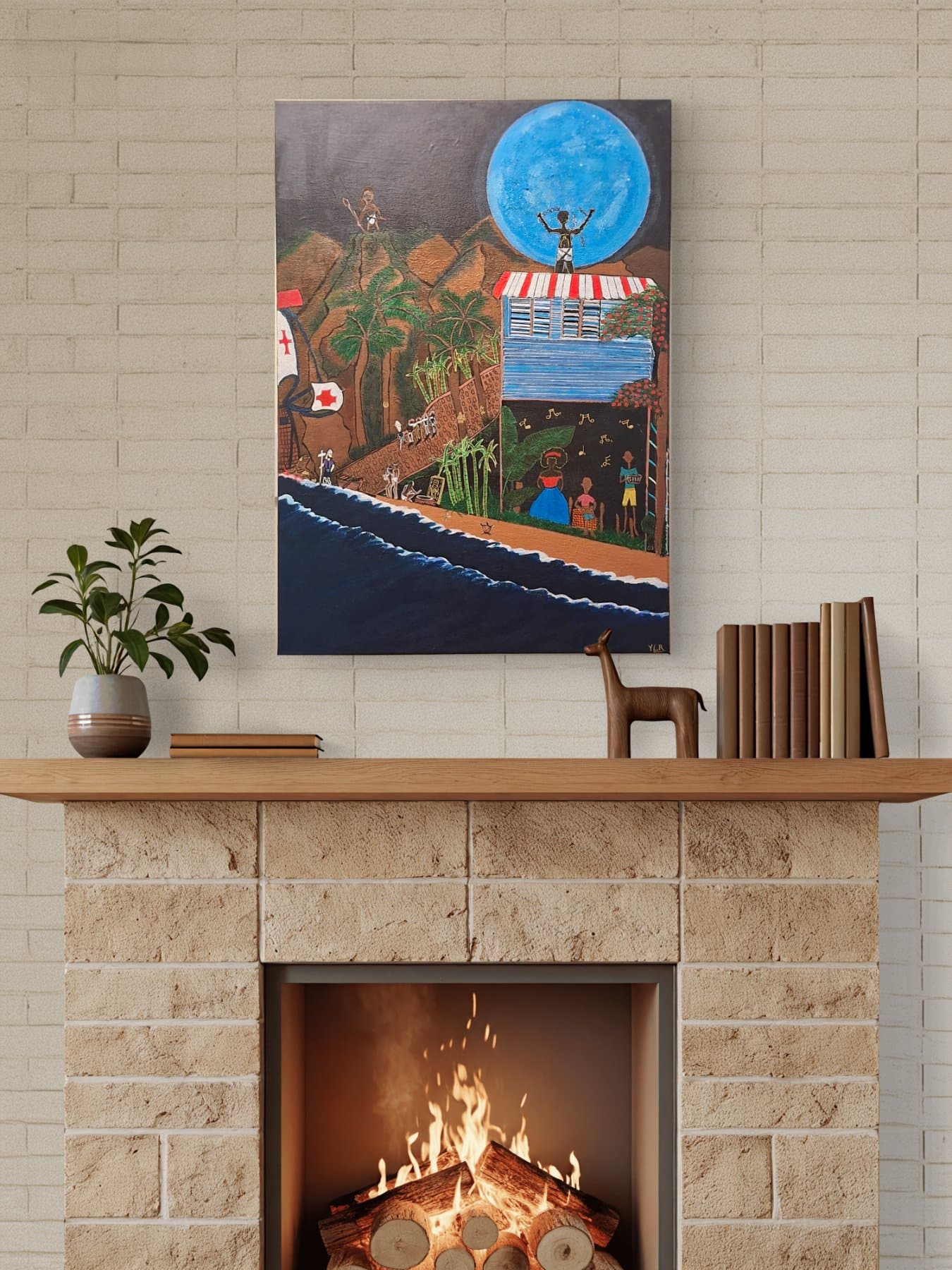
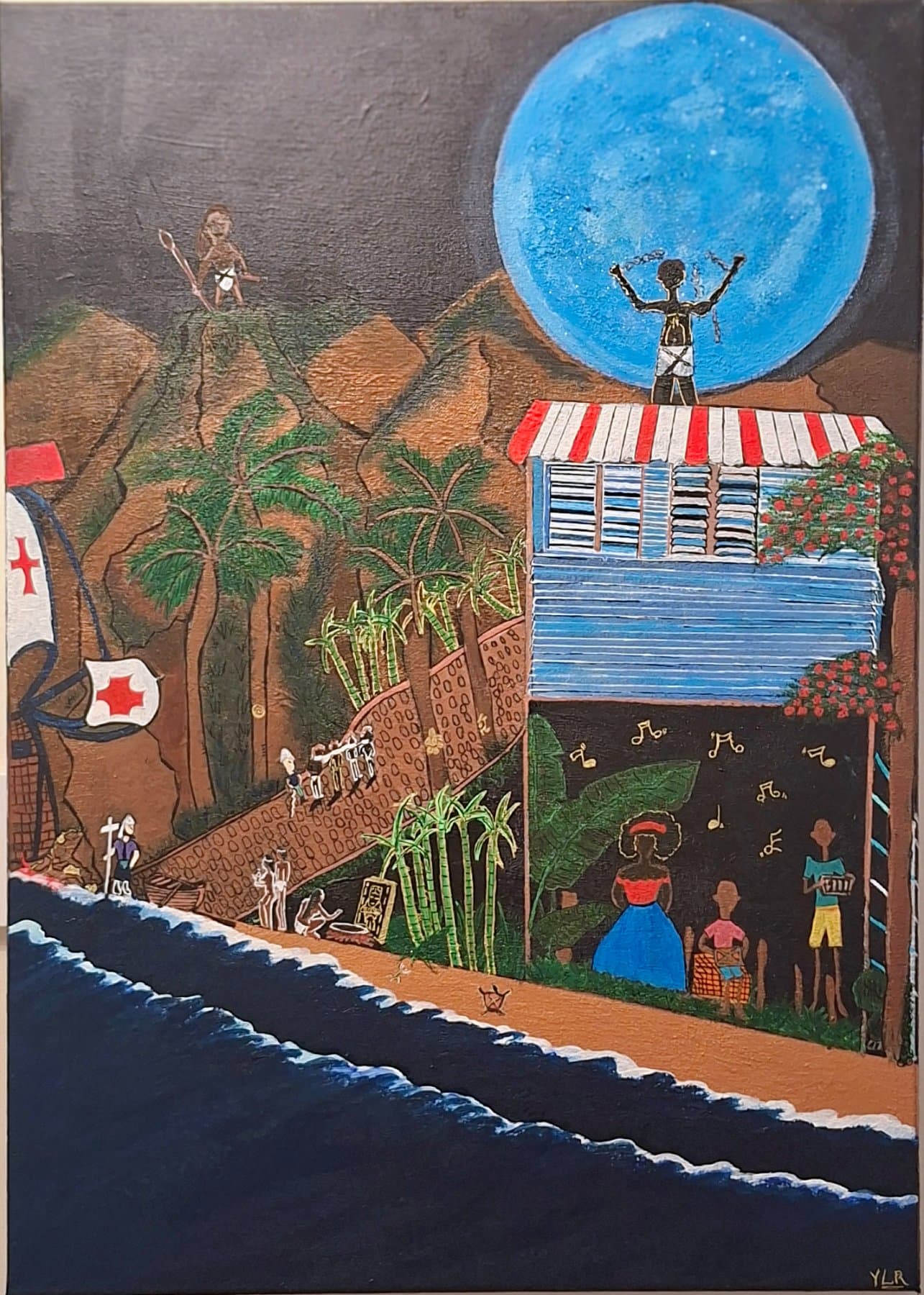
This painting compresses five centuries of Caribbean history into a single shore — the bay of Samaná, in the Dominican Republic, where European ships first reached the land and where the artist's father was born. Read from the mountain peak downward and left to right, it moves through time: a Taíno figure stands sovereign on the height; a caravel arrives bearing the red cross of conquest; a coloniser steps onto the sand; the enslaved are marched inland along a cobbled path. Yet the island's people endure — living by the sea with their sacred cemís, and dancing to merengue beneath a Caribbean house, alive and unbroken. Crowning the composition, a figure breaks their chains against a blue moon. Painted in a naïve, folk register rooted in Afro-Caribbean and Taíno cultural memory, the work holds discovery, extermination, and cultural survival in a single frame. It is a history of loss, but also of what could not be erased — the music, the belief, the people who remain.