Available
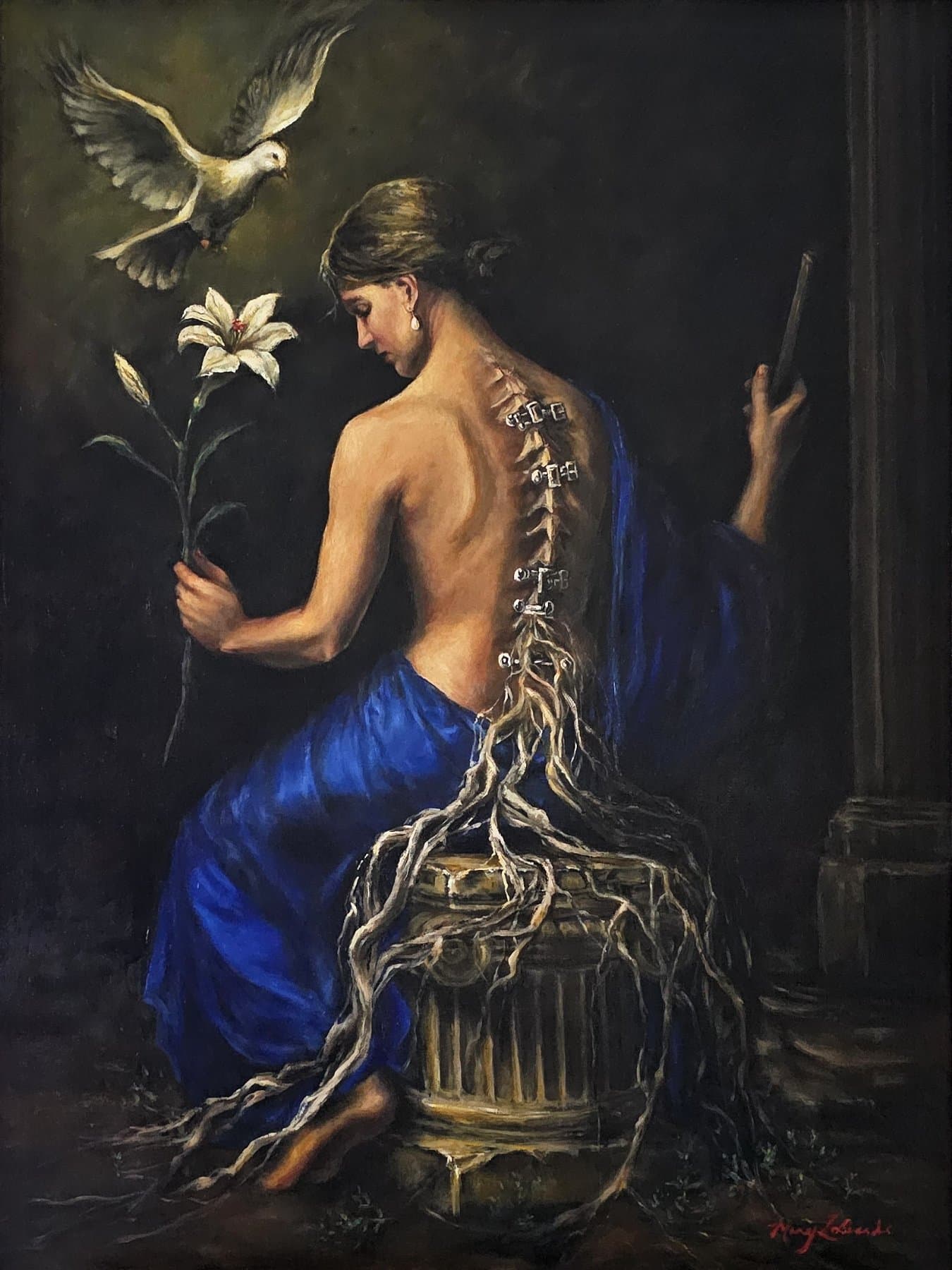
Roots of Recovery
Mary LaGarde$4,800
- Medium
- Oil on Canvas
- Dimensions
- 40"H × 30"W
- Year
- 2026
Two artists. Two accidents. One unbroken image. In 1944, Frida Kahlo painted herself split open — her spine replaced by a crumbling Ionic column, her body cinched together by a medical corset after a near-fatal bus accident. She called it The Broken Column. It remains one of the most visceral depictions of physical suffering in art history. In Roots of Recovery, Mary LaGarde reaches for the same symbol after her car accident and spinal fusion — and transforms it. The broken column is no longer the body itself. It's beneath her: a shattered foundation she sits upon and grows from. Roots from her surgically repaired spine twist down into the rubble, cracked but load-bearing. Green shoots rise from the wreckage. Kahlo made suffering visible. LaGarde makes survival visible. Both paintings come from real accidents, real surgeries, real bodies that refused to be only broken. "I wasn't interested in painting suffering. I was interested in what grows out of it." — Mary LaGarde